Vehicle Rental Expense Restriction and Accounting Record: 2026 Guide - dailydrive

For businesses, vehicle rental is a method that provides both operational ease and financial flexibility. However, the "passenger car expense restriction" practice in our tax laws prevents all of these expenses from being shown as deductible expenses. Especially with the update of the 2026 vehicle inspection fee and rental limits according to the Revaluation Rate (YDO), new thresholds have emerged that accounting departments need to pay attention to in their calculations.
At DailyDrive, we have simplified the complex tax legislation and gathered the 2026 limits, NDE (KKEG) passenger car calculations, and correct accounting records in a single guide for you.
Scope of Expense Restriction: Who is Affected?
In accordance with Article 40 of the Income Tax Law and the Corporate Tax Law, only a certain portion of the expenses of passenger cars rented or purchased by businesses can be deducted from the tax base.
-
What is a Passenger Car?: Motor vehicles included in position 87.03 of the Turkish Customs Tariff Schedule, with a maximum of 9 seats including the driver. (Vehicles like Doblo, Kango fall into the passenger car class and are subject to restriction if they are registered as "Private" (Hususi) or "Passenger Transport" in the license).
-
Who is Affected?: All Income and Corporate Taxpayers whose main business activity is not renting or operating passenger cars (driving schools, taxi businesses, rent-a-car companies) are subject to this restriction.
-
Exceptions: Vehicles used by companies whose main activity is vehicle rental or commercial transportation for this purpose are exempt from restriction.

2026 Passenger Car Rental and Expense Limits
The limits applied in 2026 are the main factors determining the tax advantages of businesses. The portions exceeding the amounts updated in the passenger car rental limit 2026 year are treated as Non-Deductible Expenses (NDE/KKEG).
(Note: The figures below are exemplified according to the estimated Revaluation Rate increases for 2026; official gazette amounts should be taken as the basis.)
|
Expense Type |
Restriction Rate / Limit |
Explanation |
|
Monthly Rental Fee |
36,000 TL (Excl. VAT)* |
The excess of the rental fee exceeding this amount is NDE. |
|
General Expenses |
70% Deductible / 30% NDE |
Fuel, maintenance, repair, insurance, highway tolls, etc. |
|
SCT and VAT |
950,000 TL (Total)* |
The portion written as an expense instead of being added to the cost in purchasing. |
|
Depreciation |
Pro-rata Depreciation |
Proportional depreciation is set aside in purchasing. |
*Figures are representative for 2026. For exact calculations, check the official GİB Passenger Car Guide and current communiqués.
The Logic of 70% Expense Restriction
The 70% - 30% rule applies to all current expenses (fuel, repair, maintenance, insurance) other than the rental fee.
-
70%: Can be deducted from the tax base (Expense).
-
30%: Cannot be deducted from the tax base (NDE/KKEG).
NDE (KKEG) Concept and Impact on Tax
Non-Deductible Expense (NDE - Kanunen Kabul Edilmeyen Gider) is an amount that, although considered an expense in determining commercial profit, must be added back to the profit in determining the fiscal profit (tax base). In other words, you pay extra tax for the 30% portion that you cannot write off as an expense due to the vehicle rental expense restriction.
Example Scenario:
Your company spent 10,000 TL on fuel monthly in 2026.
-
It appears as a 10,000 TL expense in the accounting record.
-
However, when calculating tax, the state says: "I accept only 7,000 TL of this. You will pay tax on the remaining 3,000 TL."
Passenger Car Accounting Record Logic and Examples
The most critical point in expense restriction is to separate the total amount of the invoice into "legally accepted" and "not accepted" instead of writing it under a single item. Here are the procedures to be followed in two basic scenarios:
Scenario 1: Recording the Rental Invoice
For example; let's assume your business rented a passenger car for 50,000 TL excluding VAT (Assuming the 2026 legal limit is 36,000 TL).
In this case, you should follow these steps when creating the accounting record:
-
Portion to be Written as Expense: The portion of the amount in the invoice up to the legal limit (36,000 TL) is recorded in the General Administrative Expenses (770) account.
-
Portion that is NDE: The difference of 14,000 TL exceeding the limit should be monitored in the Other Extraordinary Expenses and Losses (689 / Non-Deductible) account.
-
VAT Separation: This is where the most mistakes are made. You can only transfer the VAT corresponding to the 36,000 TL you can write as an expense to the VAT Deductible (191) account. You cannot subject the VAT amount (2,800 TL) corresponding to the portion exceeding the limit (14,000 TL) to deduction; you must add this amount to the NDE account as well.
Scenario 2: Recording Fuel, Maintenance, and Repair Invoices
For example; a fuel or maintenance invoice of 1,000 TL excluding VAT came for your vehicle. Here, the 70% - 30% ratio comes into play, not the limit amount.
The path to follow in the accounting record is as follows:
-
70% Expense Right: 700 TL, which is 70% of the invoice amount, is processed directly as an expense into the (770) account. The VAT corresponding to this amount (140 TL) is recorded as VAT Deductible (191).
-
30% NDE Obligation: The remaining 30% portion of the invoice (300 TL) is not accepted as an expense for the business and is thrown into the NDE (689) account. Likewise, the VAT corresponding to this portion (60 TL) cannot be claimed back from the state and is added to the cost/expense (as NDE).
In summary; it should not be forgotten that the VAT of the expenditure that the state does not accept as an expense is also not accepted as a deduction.
Frequently Made Mistakes
Do not fall into these traps for a correct passenger car accounting record:
-
Not Counting Light Commercials as Passenger Cars: Vehicles like Doblo, Fiorino fall into passenger car restriction if the license does not say "Cargo Transport".
-
Deducting NDE VAT: The VAT of an expense that is NDE is also NDE; it cannot be subject to deduction.
-
Skipping Loan Interests: The interest of the first year in the loan of the purchased vehicle is added to the cost, subsequent years are subject to expense restriction.
-
Applying the Rental Limit Incorrectly: The limit is the figure excluding VAT. Check the invoice according to the VAT included/excluded distinction.
Pre-Closing Accounting Checklist
Check these 8 items before performing period-end operations:
-
[ ] Are the license classes of rented vehicles checked? (Commercial/Passenger distinction)
-
[ ] Do monthly rental invoices exceed the 2026 limit?
-
[ ] Are the exceeding parts and the VAT corresponding to them thrown into the NDE account?
-
[ ] Is the 70/30 separation made in fuel, maintenance, HGS, and insurance expenses?
-
[ ] Are the VAT amounts thrown into NDE accounts removed from the Deductible VAT list?
-
[ ] Are MTV (Motor Vehicle Tax) payments (if any) recorded entirely as NDE?
-
[ ] Is the restriction taken into account in reflection invoices (e.g., damage reflection)?
-
[ ] Is the final limit check performed from TÜRMOB or GİB tools?
Calculation Tool: You can use TÜRMOB's official tool to verify your transactions: TÜRMOB Passenger Car Expense Restriction Calculation
Summary
Passenger car expense restriction 2026 plays a critical role in the tax planning of companies. When renting, looking not only at the monthly payment but also at how much of this payment can be expensed allows you to see the net cost to the company. In rentals you will make from DailyDrive, we offer you a transparent process regarding invoicing and cost advantages.
Remember; a correct accounting record adds as much value to your business as the correct vehicle choice.
Similar Articles



Dailydrive
Blog
From car rental tips to travel tips, from maintenance advice to the best routes, our blog is full of guides to help you plan your trip in the best possible way.

Is It Smart to Rent a Car for Summer Vacation? Rental Car vs. Your Own Car
Driving your own car vs. renting a car for summer vacation? Compare hidden costs, wear ...
View Details ->

Weekly vs. Monthly Car Rental: Which One Is Advantageous?
How does rental duration affect your budget? Discover the benefits of weekly and monthl...
View Details ->

Why Fuel Quality Becomes More Critical in 2026?
2026 engine technologies and emission rules are changing fuel choices. Discover the ris...
View Details ->

Best Spring Travel Destinations 2026: Witness the Awakening of Nature
Discover the top spring routes for 2026. From the cultural heart of Eskişehir to the Ae...
View Details ->

Rental Car Insurance Guide: What to Choose?
When renting a vehicle, selecting the correct protection package is just as critical as...
View Details ->

Valentine’s Day Getaway Routes Near Istanbul: Discover Love on the Road
Romantic routes 1-3 hours from Istanbul, complete with budget and transport guides. Pla...
View Details ->
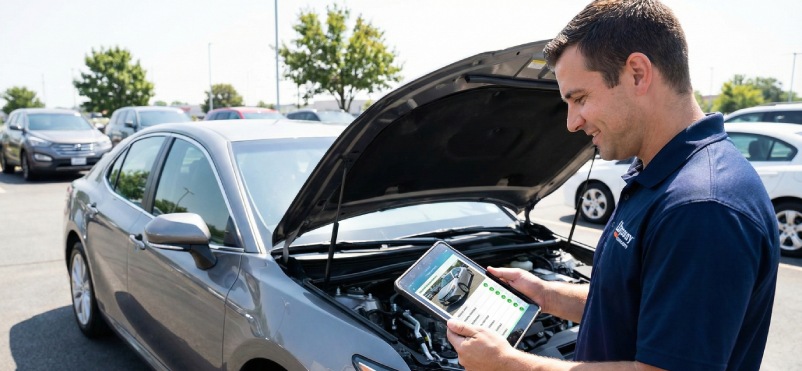
New Behaviors Changing "Used Cars" in 2026: Digital Inspection and Video Checks
The automotive world is entering a radical digital transformation era where consumer ex...
View Details ->

Driving Across Turkey: The Ultimate 7-Day Road Trip Plan
The ultimate 2026 Turkey road trip guide! Explore routes from Istanbul to Kaş in 7 days...
View Details ->


_9l2oes7rox.png)
Welcome to dailydrive!
dailydrive is one of the leading platforms serving to fulfill your car rental needs in Turkey. No matter where you are in the world, you can easily select and book the car you need for your travels in Turkey. Whether for a single day, a week, or a month, you can rent your dream car from dailydrive at attractive prices.
Airport Locations
Istanbul Airport Car Rental
-
Istanbul Sabiha Gokcen Airport (Off-Airport) Car Rental
-
Izmir Adnan Menderes Airport Car Rental
-
Antalya Airport Car Rental
-
İstanbul Sabiha Gökçen Airport
City Locations
Book Car Rental in Turkey with dailydrive
With its expertise in the tourism sector and its innovative approach, dailydrive offers professional solutions for your car rental needs in Turkey. From city travel to holiday plans, it provides rental services tailored to every requirement, promising a reliable travel experience. With a strong technical infrastructure, user-friendly website, and customer-oriented service approach, dailydrive meets the expectations of both individual and corporate clients at the highest level. Featuring streamlined reservation systems and competitive pricing options, dailydrive stands out by offering fast and practical solutions that save you time. It also offers a wide fleet of vehicles suitable for daily, weekly, monthly, or long-term rentals. The diverse range of vehicles includes options from both economy and luxury segments, appealing to every budget. Through its corporate solutions, dailydrive provides flexible service options tailored to various needs and continues to be one of the leading platforms in the industry. Its fleet includes vehicles from the most trusted and popular automotive brands, combining high comfort and quality. Each vehicle undergoes regular maintenance and inspections to ensure a safe experience for customers. Book now to rent your dream car at attractive prices and enjoy a pleasant journey.